The Role of IT in Revolutionizing Healthcare
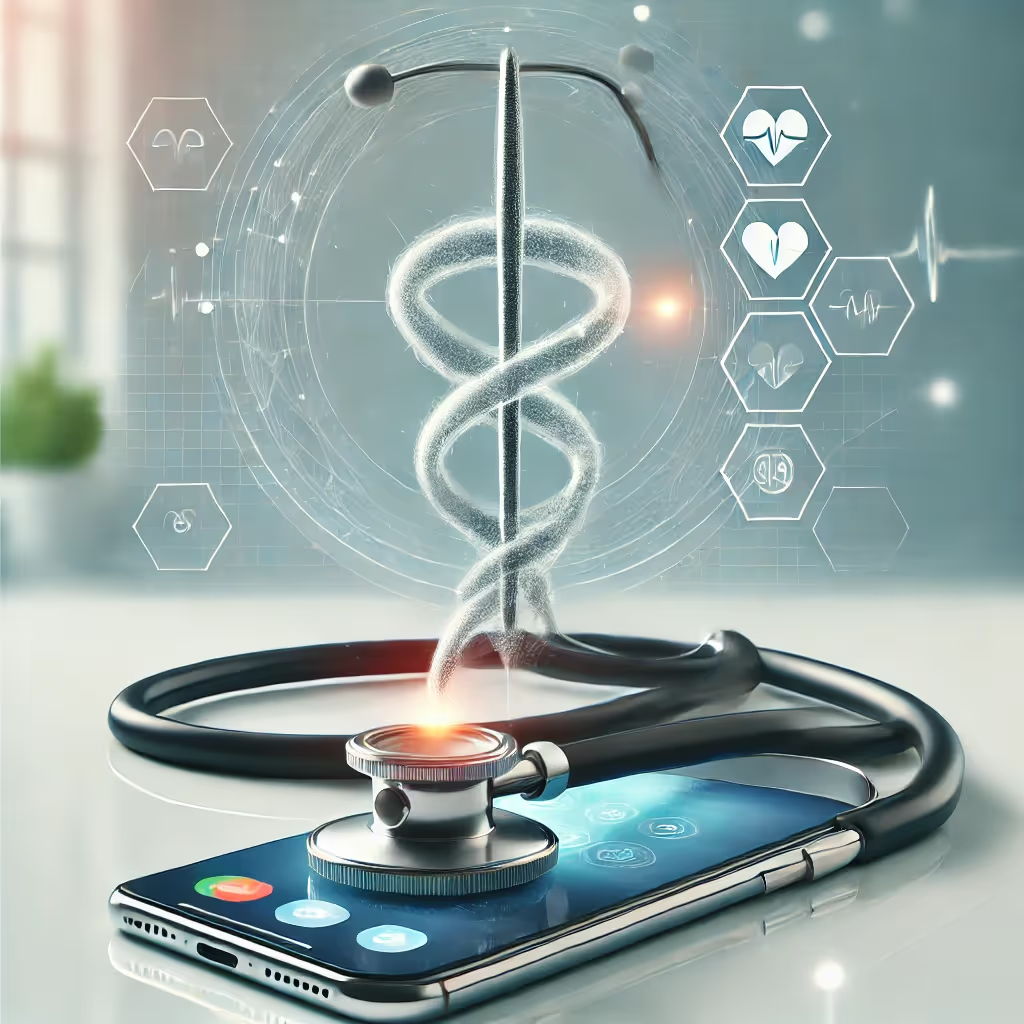
The integration of IT in healthcare is transforming patient care through advancements like telemedicine, AI-driven diagnostics, and data security. These technologies improve accessibility, personalization, and efficiency, shaping the future of healthcare.


The Role of IT in Revolutionizing Healthcare
The integration of information technology (IT) into healthcare is reshaping the way medical services are delivered, enhancing both patient care and operational efficiency. From electronic health records (EHRs) to telemedicine and AI-powered diagnostics, IT is driving innovation in healthcare, making it more accessible, efficient, and personalized.
1. Electronic Health Records (EHRs) and Data Management
One of the most significant advancements in healthcare IT is the widespread adoption of Electronic Health Records (EHRs). EHR systems have replaced paper-based records, allowing healthcare providers to store and manage patient information digitally. This has streamlined access to patient data, improving care coordination and reducing the risk of errors in diagnosis and treatment.
EHRs also enable healthcare professionals to access patient history, medications, test results, and treatment plans in real time. This integrated system improves communication among healthcare providers, reduces redundancy, and ensures continuity of care.
2. Telemedicine and Remote Care
IT has revolutionized the delivery of healthcare services through telemedicine, allowing patients to consult with doctors remotely via video calls, messaging, or apps. This innovation has become especially critical during the COVID-19 pandemic, enabling healthcare access for patients who cannot visit hospitals or clinics in person.
Telemedicine increases healthcare accessibility, particularly for people living in rural areas or those with mobility issues. It also reduces the strain on healthcare systems by minimizing unnecessary in-person visits, making healthcare more efficient and cost-effective. Remote monitoring tools, such as wearable devices, further enhance patient care by allowing real-time tracking of vital signs and chronic conditions.
3. AI and Machine Learning in Diagnosis
Artificial intelligence (AI) and machine learning are making waves in healthcare by providing advanced diagnostic tools. AI algorithms can analyze medical images, pathology reports, and other patient data to assist healthcare providers in making accurate diagnoses. For instance, AI-powered platforms are already helping radiologists detect early signs of diseases such as cancer.
Machine learning models can identify patterns in large datasets that would be difficult for humans to detect, leading to earlier diagnosis and more personalized treatment plans. This technology is particularly effective in precision medicine, where treatments can be tailored to individual patients based on their genetic profiles.
4. Healthcare Data Security
As healthcare IT grows, so does the importance of data security. Healthcare organizations handle vast amounts of sensitive data, including patient medical histories and personal information, making them prime targets for cyberattacks. IT security systems must comply with regulations such as HIPAA (Health Insurance Portability and Accountability Act) to protect patient data from breaches.
With the increasing digitization of healthcare, encryption, multi-factor authentication, and regular system audits have become essential tools to safeguard sensitive information. Cybersecurity measures also ensure that telemedicine platforms, EHRs, and other digital healthcare services remain secure and reliable.
5. Big Data and Predictive Analytics
The use of big data in healthcare is enabling more informed decision-making by analyzing vast amounts of data to identify trends and patterns. Healthcare providers can use predictive analytics to anticipate patient outcomes, manage population health, and optimize hospital resources.
For example, predictive models can help identify patients at risk of developing chronic conditions, enabling early intervention and preventive care. Big data also plays a role in improving clinical research by speeding up the process of analyzing medical trials and patient responses to treatments.
6. Wearable Technology and Remote Monitoring
Wearable technology, such as smartwatches and fitness trackers, is becoming a valuable tool in healthcare. These devices allow individuals to monitor their own health metrics, such as heart rate, physical activity, and sleep patterns, providing real-time data that can be shared with healthcare providers.
Remote monitoring devices, such as blood pressure cuffs or glucose monitors, are especially helpful for managing chronic conditions. These technologies provide continuous data to healthcare providers, allowing them to adjust treatments as needed without requiring frequent in-person visits.
7. Cloud Computing in Healthcare
Cloud computing has transformed the way healthcare organizations store and access data. By using cloud-based solutions, hospitals and clinics can store large amounts of patient data securely and allow authorized healthcare professionals to access it from anywhere. This facilitates collaboration among healthcare teams and improves patient care, especially in emergency situations where quick access to records is critical.
Cloud-based EHRs also reduce the need for expensive on-site servers, cutting down on IT infrastructure costs. Moreover, cloud systems offer enhanced data backup and recovery options, ensuring patient information remains safe even during system failures.
8. Blockchain for Data Integrity
Blockchain technology is gaining traction in healthcare, primarily for maintaining data integrity and security. By creating decentralized and immutable records, blockchain ensures that patient data cannot be altered or tampered with without authorization. This is particularly useful in protecting the integrity of EHRs and ensuring that patient records are accurate and up to date.
Blockchain also plays a role in improving the transparency and efficiency of the healthcare supply chain, especially in the tracking of pharmaceuticals. It helps in verifying the authenticity of drugs, reducing the risks of counterfeit medications entering the system.

How App Development and Automation are Revolutionizing Healthcare
In recent years, the healthcare industry has seen tremendous advancements driven by technology. Two of the most transformative elements in this evolution are app development and automation. These technologies are reshaping how healthcare providers deliver service

Automation and AI in Finance
The finance sector is embracing automation and AI to improve security, reduce costs, and enhance customer experiences. This blog will explore how Synerge’s services are empowering financial institutions.
Healthcare Technology Trends
Healthcare is undergoing rapid digital transformation. This blog will focus on how app development, automation, and IT support are revolutionizing healthcare, making it more efficient, accessible, and patient-centered.