Demystifying AI for Finance Directors
As the Finance Director for a firm in a fast-moving new industry, you understand the need to keep ahead of the curve. Pressure is mounting, not just from the competitors but from the rapidly evolving technological changes.


Demystifying AI for Finance Directors: A Practical Guide for SMEs
As the Finance Director for a firm in a fast-moving new industry, you understand the need to keep ahead of the curve. Pressure is mounting, not just from the competitors but from the rapidly evolving technological changes. Artificial Intelligence (AI) pops up everywhere: in board meetings and industry conferences. Acronyms dictate terms and phrases, and the sheer volume of information makes it hard to know where to begin. What does it mean for you and your finance department?
In this article, we will offer a concise but clear overview of the key technologies making up AI, their adoption by finance departments, and the risks and rewards associated with use.

Key AI Technologies Transforming Finance Departments
There are a variety of AI tools that are now affordable and scalable enough for SMEs. Below we’ll discuss some of the most important AI tools that can help to improve business processes for your finance department.
Automated Data Entry AI Tools
What It Is: Entering data is a long, drawn-out process, and errors inevitably arise. AI-powered tools use automated data entry solutions to save time and increase reliability using rules-based or machine learning-based approaches.
How It Works: Financial documents can be trained with machine learning algorithms to recognise common patterns and automatically classify transactions and reconcile accounts.
Why It Matters: This reduces human error and frees up your team to focus on more strategic tasks. It also speeds up the month-end close, giving you more timely insights.
How to Implement: Start with AI-driven tools like Xero or QuickBooks. Integrate with current systems, train your team, and monitor for optimization.
Predictive Analytics for Financial Forecasting and Cash Flow
What It Is: With predictive analytics, artificial intelligence is used to analyse historic data to predict changes in financial flows. This helps anticipate cash flow issues, which turns budgeting into a reliably planned task rather than a shot in the dark.
How It Works: AI can detect patterns and trends in your payment data to forecast cashflows, spot potential shortfalls and work out the best times to borrow to cover short-term cashflow problems – or to raise money for investment. By linking into your existing financial systems for accurate, real-time figures, apps such as Float and Fathom can point out the best times to borrow to cover a short-term cashflow problem – or to raise money to invest.
Why It Matters: Given a clear picture of what’s coming next – and how much it will cost – predictive analytics allows you to front-load cash or spend based on a strategy. For example, good information can help you smooth out cash crunches or make wise choices about where to invest or how much to borrow.
How to Implement: Use a decision-enabling platform such as Anaplan, Float, or Vena Solutions along with your organisation’s financial systems so you have more sophisticated forecasting and scenario-planning capabilities.
AI-Enhanced Financial Planning and Analysis (FP&A)
What It Is: AI-driven FP&A tools analyse datasets to provide more accurate budgeting and quantitative results that can guide decision-making and gain an edge over competitors.
How It Works: These tools use algorithms to pick out and analyze trends in large datasets and provide automated what-if analyses, or custom reports with actionable insights.
Why It Matters: AI-driven FP&A can significantly improve the accuracy of your forecasts and help you make more agile decisions, which is crucial in today’s fast-paced business environment.
How to Implement: Jedox, Datarails, and Board are among the platforms that can further advance FP&A processes. Train your team to interpret AI-generated insights to derive the maximum benefit.

AI-Based Automated Accounts Payable Solutions
What It Is: These AI-driven solutions allow for automated data extraction from invoices using optical character recognition (OCR) and natural language processing (NLP) to speed up approvals and minimise errors, resulting in faster payments.
How It Works: OCR and NLP technologies can scan invoices to grab data and match it to existing purchase orders, and then flag ones that might not match for review.
Why It Matters: Automating the handling of invoices minimises errors, shortens the payment cycle and ensures payment in accordance with accounting guidelines.
How to Implement: Adopt tools like Tipalti, map workflows, test with a small batch, and scale as needed.

AI for Fraud Detection.
What It Is: AI is able to look at data on individual transactions as they happen and find unusual behaviour faster than ever before to respond to fraud more quickly and also be more compliant with financial regulations.
How It Works: AI systems develop expected patterns of transactions and can alert on those that seem to stray outside the norms, to detect fraudulent activities. These tools can also help organisations ensure regulatory compliance, by monitoring transactions in real time and raising alerts.
Why It Matters: Protecting your company from fraud and ensuring compliance are non-negotiables. AI offers a more efficient and reliable way to manage these risks than traditional methods.
How to Implement: Implement systems such as ThetaRay, and integrate with your transaction systems while setting thresholds for detection, and regularly conduct ‘health checks’ against them.
Natural Language Processing (NLP) for Financial Reporting
What It Is: NLP assists finance teams in putting data into simpler terms so that financial insights can be more easily understood and leadership can better interact with team members from other departments.
How It Works: NLP can be used to generate financial reports from raw data or to query databases using natural language. For instance, you could ask, "What were our top expenses last quarter?" and receive a detailed report in response. Tools like Chata.ai or Microsoft's Power BI incorporate NLP for easier data interaction.
Why It Matters: NLP makes financial data more accessible to non-experts, improving collaboration across departments and making it easier to generate insights.
How to Implement: Check out Chata.ai and Microsoft Power BI for easier ways to create reports and to improve communication.
Balancing Early vs. Late AI Adoption
When to begin using AI platforms is a strategic choice based on your company’s capabilities and willingness to make changes. Here are some pros and cons of handling this major decision.
Early Adoption
Early adopters are able get ahead of the competition by making operations more efficient and improving choices, such as the system used by JPMorgan Chase’s system (COIN), which reviews legal documents and saves them 360,000 hours of work per year. One drawback of Early adoption is that it could result in a significant cost, requiring a heavy investment in training and infrastructure with no certainty of the anticipated returns.
Late Adoption
Late adopters can learn from the mistakes of early adopters and build on more mature technologies. This can also mean that late adopters have less to unlearn. Some small financial institutions, for example, held off on AI, and now can dependably monitor and flag transactions for fraud. On the other hand, lagging too far behind competitors who are using AI can put companies in a disadvantageous position. The best way to prevent this is to stay plugged in and learn about AI developments.

Learning from AI Successes and Failures
When using AI, it’s important to know that along with benefits, AI can also present challenges. Here are a couple of lessons learned from AI:
Success Stories
Allianz Insurance: After adopting AI, they were able to update insurance claims processing, and enhance customer experiences. For the early stages of claims assessment, the company initiated an automatic machine-learning process that substantially accelerated the processing time (60 per cent faster), benefiting both client happiness and operational expenditures. AI allowed Allianz to get a head start on competitors, and greater capacity to manage the rising number of clients (Allainz)
Amazon: Perhaps the world’s great early success in AI is Amazon. The company’s recommendation engine is firmly credited with permanently increasing sales by having AI explore data on customers and what they’d purchased, to predict and offer what they might want to buy next. This focus on AI meant that Amazon has started to move away from being a mere retail company into the mainstream of technology. This has been welcomed at Amazon HQ in Seattle, as it increased sales and kickstarted a cascade of growth in e-commerce. (LinkedIn)
JPMorgan: JPMorgan Chase put out an AI system called COIN (Contract Intelligence) for reviewing legal documents and contracts, using machine learning techniques. The system can review documents in seconds as against the 360,000 hours it took the lawyers annually to do so. This AI-induced ease has costs benefits, as well as minimises human errors, pointing to how human processes such as document review can successfully be managed by AI
Cautionary Tales
IBM Watson in Healthcare: IBM’s Watson for Oncology was regarded as a revolutionary AI system that could help doctors diagnose and treat cancer. But the AI system ran into early challenges, such as providing erroneous recommendations and being unable to fit into the healthcare providers’ existing systems. Watson Health was eventually sold to a private equity firm. (Quartz).
Microsoft’s Tay Chatbot: Microsoft launched a Twitter account for Tay, an AI chatbot whose purpose was to learn from Twitter users about the world. In a matter of hours, Tay began spewing racist and sexist abuse. Users had intentionally game the AI by taking advantage of rules that allow it to learn more from user interactions. This failure showed that AIs may need some guardrails before being released into the wild (IEEE Spectrum).
Conclusion
Using AI is a strategic move that could strengthen your SME but the key takeaway for you here is that AI adoption, whether early or late, must be approached strategically. Make sure any use of AI is tied to your business objectives. Begin with small AI projects like improving cash flow forecasting or using AI to automate repetitive tasks. Once you get a feel for AI assistance, start using it for other areas of your business.
Ongoing training and support can help encourage a learning culture. You can use AI to improve how you operate and make decisions, and make sure your business is set up for the long haul. AI adoption should be strategic – mitigating risks, seizing opportunities, and ensuring that all the steps on the journey are guided by a wider organisational strategy.
Ready to streamline your day-to-day operations and improve your company’s efficiency?
Whether you're in eCommerce, healthcare, or financial lending, our solutions are designed to boost efficiency and drive growth. Contact us today to schedule a consultation and see how we can revolutionize your company’s operations.
References
- Superior Data Science (n.d.). J.P. Morgan - Coin - A Case Study of AI in Finance. Retrieved from https://superiordatascience.com/jp-morgan-coin-a-case-study-of-ai-in-finance/
- Allianz. (2024). Integrating ‘technology with heart’: Allianz and Accenture’s insights on GenAI. Retrieved from https://www.allianz.com/en/press/news/business/insurance/240701-allianz-gen-ai-integrating-technology-with-heart.html.
- LinkedIn (Feb 2024). Arkadiusz Skuza. The Role of Machine Learning and AI in Amazon’s Data Monetization Approach. Retrieved from https://www.linkedin.com/pulse/role-machine-learning-ai-amazons-data-monetization-approach-skuza-ip6pc/.
- Quartz, (March 2022). Sandeep Konam. Where did IBM go wrong with Watson Health? Retrieved from https://qz.com/2129025/where-did-ibm-go-wrong-with-watson-health.
- IEEE Spectrum (Nov 2019, updated Jan 2024). Oscar Schwartz. In 2016, Microsoft’s Racist Chatbot Revealed the Dangers of Online Conversation. Retrieved from https://spectrum.ieee.org/in-2016-microsofts-racist-chatbot-revealed-the-dangers-of-online-conversation.
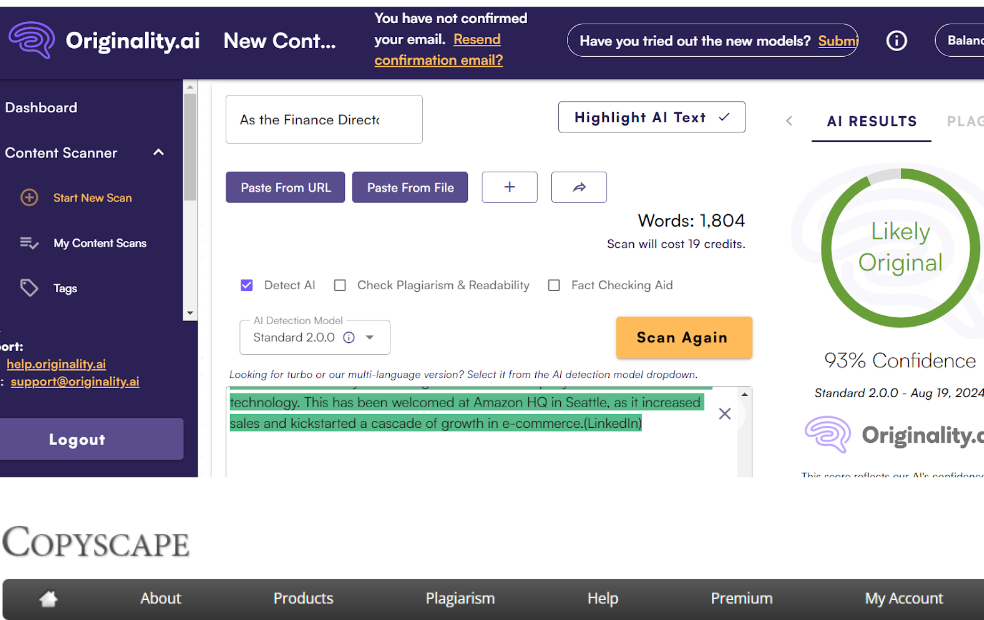
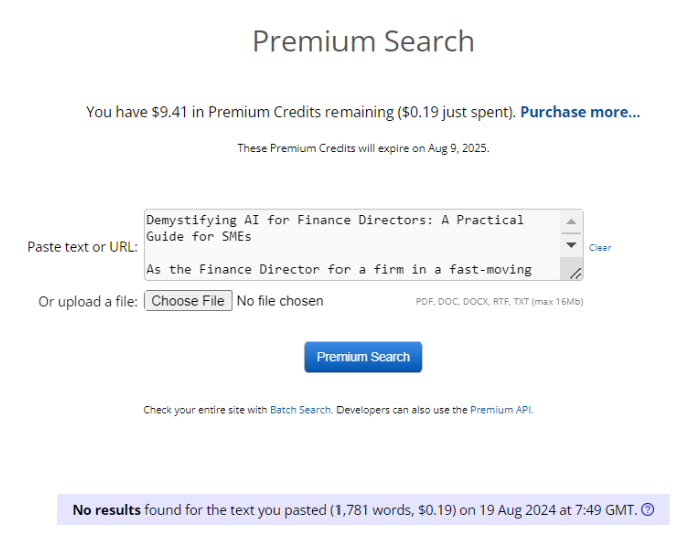
Originality. Ai Scan link
https://app.originality.ai/share/apf81tio6ezj4dg3

How App Development and Automation are Revolutionizing Healthcare
In recent years, the healthcare industry has seen tremendous advancements driven by technology. Two of the most transformative elements in this evolution are app development and automation. These technologies are reshaping how healthcare providers deliver service

Automation and AI in Finance
The finance sector is embracing automation and AI to improve security, reduce costs, and enhance customer experiences. This blog will explore how Synerge’s services are empowering financial institutions.

Healthcare Technology Trends
Healthcare is undergoing rapid digital transformation. This blog will focus on how app development, automation, and IT support are revolutionizing healthcare, making it more efficient, accessible, and patient-centered.